SKU: 90056519895
schlafsack für minus 20 grad

schlafsack für minus 20 grad Winterschlafsack

Sale price$22.25 Regular price$24.72
Save 10%

Pay in installments of $6.18 with ShopPay, AfterPay and Klarna

Shipping Estimate
USA
  • USA
  • CAN

Ships within 48 hours · Estimated delivery Jul 15 - Jul 20

Promo Codes Available:

For Your Every Summer RSVP, with Code: SUMMER15

Description

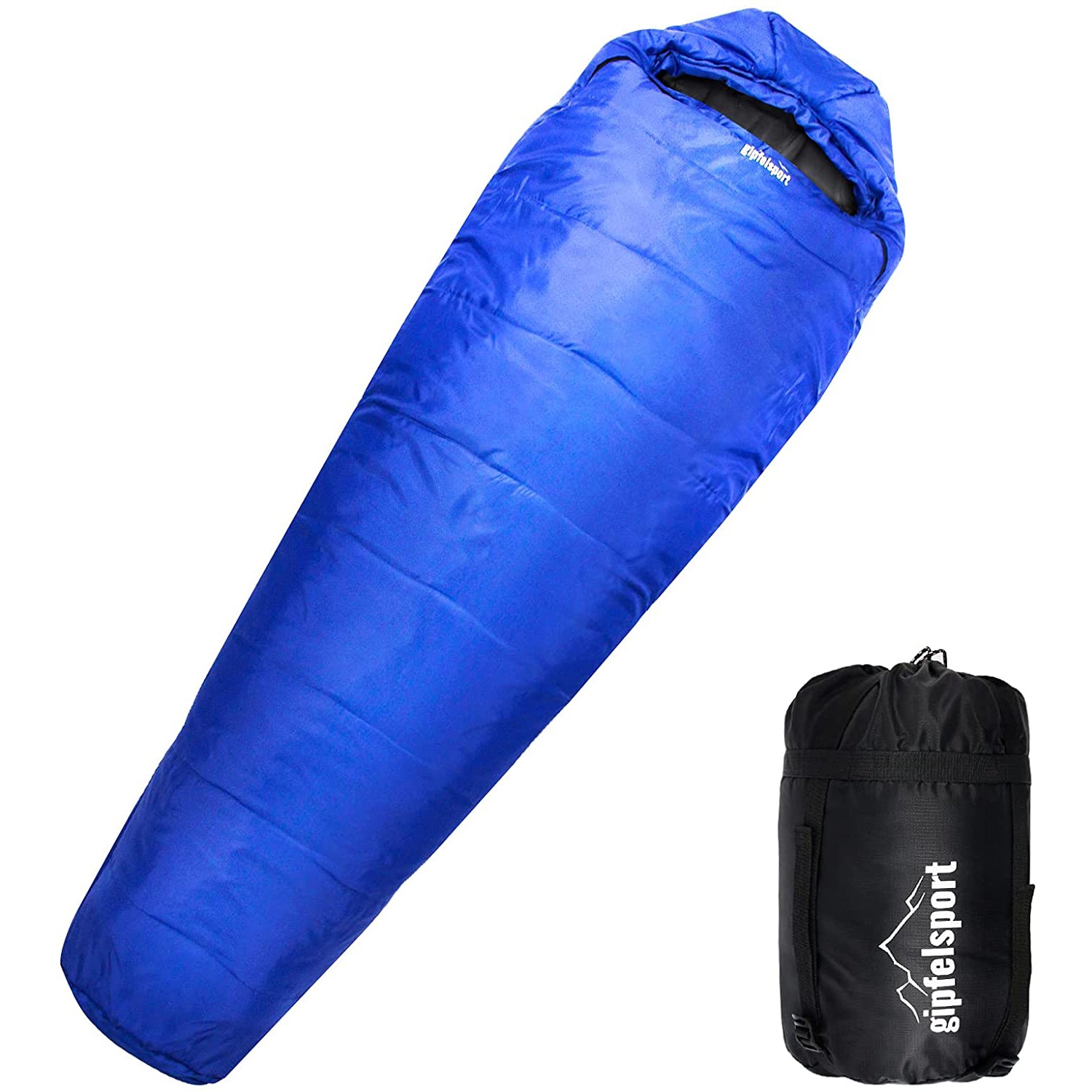
schlafsack für minus 20 grad WinterschlafsackWinterschlafsack Schlafsack aus Kunstfaser Dicke von 300gr m Gewicht: 1550g Gre: 215 x 85 (55) cm Komfortbereich (T comf): 2C unterer Grenzbereich (T lim): 4C extremer Bereich (T ext): 20C Beschreibung des Kunstfaser Schlafsack fr den Winter Winterschlafsack fr kalte Temperaturen Der Winterschlafsack von Gipfelsport ist etwas fr Klteempfindliche. Dennoch kommt es auf den Einsatz an. Der Schlafsack garantiert bei einer durchschnittlich frierenden

  • Winterschlafsack - Schlafsack aus Kunstfaser
  • Dicke von 300gr/m²
  • Gewicht: 1550g
  • Größe: 215 x 85 (55) cm
  • Komfortbereich (T comf): 2°C
  • unterer Grenzbereich (T lim): -4°C
  • extremer Bereich (T ext): -20°C

Beschreibung des Kunstfaser Schlafsack für den Winter

Winterschlafsack für kalte Temperaturen

Der Winterschlafsack von Gipfelsport ist etwas für Kälteempfindliche. Dennoch kommt es auf den Einsatz an. Der Schlafsack garantiert bei einer durchschnittlich frierenden Person einen Komfortbereich von etwa 2 - 12°C.
Doch was heißt das genau? Der TComf (Komfortbereich) liegt bei diesem Modell bei 2°C. Das bedeutet, dass der Wert ein unterer Komfort-Grenzwert bei Standardgebrauch bei einer Norm-Frau ist - sie friert so gerade noch nicht. Je nach körperlicher Verfassung, können diese Werte etwas schwanken. Hier sollte immer ein gewisser Puffer eingeplant werden. 
Im Allgemeinen gibt es vier Angaben für die Wärmeleistung eines Schlafsacks:

  • Der obere Grenzbereich (Tmax): Dieser Wert gibt an, bei dem ein Norm-Mensch anfängt zu schwitzen. Dieser Wert wird so gut wie nie angegeben, da bei zu warmen Temperaturen, der Schlafsack geöffnet oder beiseite gelegt werden kann.
  • Der Komfortbereich (Tcomf): Bei diesem Wert friert die Norm Frau noch so gerade nicht. Die Norm Frau ist 25 Jahre alt, wiegt 60kg und ist 1,6m groß. 
  • Der untere Grenzbereich (Tlim): Bei diesem Wert friert der Norm Mann noch so gerade nicht. Der Norm Mann ist 25 Jahre alt, wiegt 70kg und ist 1,73m groß.
  • Der extreme Bereich (Text): Dieser Wert sollte nicht erreicht werden. Hier geht es um das Überleben. Dieser Wert gibt an bei dem die Norm Frau noch überleben kann. Diese Temperaturen lassen sich nicht lange aushalten und es besteht die Gefahr der Unterkühlung.

Tipp beim Winterschlafsack Kauf

Wir empfehlen beim Kauf des Schlafsacks auf den Komfortbereich zu achten, da bei diesen Temperaturen sowohl Mann als auch Frau noch angenehm schlafen kann. Demenstprechend geben wir auch immer diesen Komfortbereich speziell an. Für diesen Winterschlafsack empfehlen wir eine Temperatur von 2 - 12°C. Dieser Bereich schwankt etwas. Je nach Statur, körperlicher Verfassung und Kälteempfinden kann dieser Bereich verschoben und/oder erweitert werden. So kann der Schlafsack auch bei einigen bis zum Gefrierpunkt (bis 0 Grad) noch erholsame Nächte bescheren. Der Schlafsack eignet sich bei wärmeren Tagen im Winter oder kälteren Nächten im Herbst und Frühling. 

Der Mumienschlafsack für längere Wärme

Der Schlafsack für den Winter hat eine eng an den Körper liegende Form. Der Mumienschlafsack ist die beliebteste Schlafsackform, da er die Wärme länger speichert als ein Deckenschlafsack. Durch die enge Form, ist auch weniger Material notwendig. Dadurch ist der Mumienschlafsack platzsparender als ein Deckenschlafsack. Der Nachteil eines Mumienschlafsacks ist, dass man in diesem weniger Bewegungsfreiheit hat. Auch kann man diesen nicht mit anderen Schlafsäcken am Reißverschluss kombinieren.

Vorteile des Mumienschlafsack

  • geringeres Gewicht
  • kleineres Packmaß
  • höhere Wärmeleistung

Einsatzgebiet des Mumienschlafsacks

Der Winterschlafsack ist ein wichtiges Accesoire für alle, die im Winter oder sich in kalten Temperaturen aufhalten. Er ist besonders nützlich bei Aktivitäten, die mehrere Tage andauern können, wie Klettern, Wandern, Skifahren und andere Wintersportarten, aber auch für längere Reisen oder Campingausflüge. Der Winterschlafsack ist dafür konzipiert, den Träger bei kalten Temperaturen warm und behaglich zu halten. Dazu verfügt er eine besonders wärmende Füllung, die dafür sorgt, dass die Körperwärem entweichen kann. Sollte es dennoch zu warm im Schlafsack werden, kann durch den 2-Wege-Reißverschluss der Fußbereich geöffnet werden.

Shipping Notes
  • Free Standard Shipping on $100+ Orders to the USA.
  • Except Preorder products are shipped in 48 hours.
  • Delivery to the USA:
  1. Standard Shipping : 3-10 business days
  • If time is of the essence, please consider selecting expedited delivery for faster service.
Exchange/Return Notes
  • We offer a 30-day return/exchange service after receiving.
  • Final sale items are not eligible for returns or exchanges.
  • To process your return/exchange, please contact us at [email protected]
  • Please click here for more details>>> Return & Exchange Policy
SKU: 90056519895

Discover Niche Categories That Outsell schlafsack für minus 20 grad

Top-Converting Item to Boost Your Average Order

4.3 ★★★★★
Based on 2082 reviews
Sort
Highest Rating
Newest First
Oldest First
Product Reviews
D
Verified Purchase
David R. Papke
Charlottesville, US
★★★★★ 5
Recommended for All Lawyers
Format: Paperback
Meyer proves his initial point that much of what lawyers do is storytelling, and he achieves his goal of providing a primer on narrative theory for lawyer-storytellers. The book is sophisticated but written in an engaging way using non-technical language. Examples from legal and literary works abound, and they range from courtroom arguments and appellate briefs on the one hand to an essay by Joan Didion and Vonnegut's "Slaughterhouse Five" on the other. Meyer's favorite stories are found in Hollywood movies, and although he seems unaware of the accomplishment,Meyer provides fresh interpretations of such movies as "HIgh Noon" and"Jaws." I strongly recommend "Storytelling for Lawyers" for all law students, lawyers, and judges.
WAS THIS REVIEW HELPFUL?YesReportShare
Reviewed in the United States on May 7, 2014
D
Verified Purchase
DoubtfulReader
Lowell, US
★★★★★ 3
Notes on Legal Style by a Law Professor and Experienced Lawyer.
Format: Kindle
BOOK REVIEW: MEYER, Philip N., Storytelling for Lawyers ISBN: 978-0-19-5396638 Read June, 13th-27th, 2017. This book discusses storytelling tools by presenting a series of examples of good storytelling, both in legal settings and in literary works and movies. If theoretical explanations are sometimes a bit dry, the frequent quoting of practical examples conveys fluidity and speed to the book. After an introduction presenting lawyers as storytellers, it deals with the roles played in storytelling by Plots (chapters 2 and 3); Character (4 and 5); Voice, Perspective, Details and Images, and Rhytm and Speed (which relate to Scene and Summary) (chapter 6); Place or Story Environment (chapter 7) and Narrative Time. Focusing maybe too narrowly on legal storytelling before American juries, plot is almost equated with melodrama. Films like Jaws and High Noon are extensively discussed, as Gerry Spence’s Closing Argument on Behalf of Karen Silkwood. The chapters on character offer interesting insights on character classification (“round” characters, with psychological depth, prone to suffer transformation as the story evolves, vs. “flat” ones), while discussing the tools for telling how a character is, as opposed to simply showing the psychological nature of each character’s character through dialogue or the actions the character performs. Examples include Tobias Wolff’s This Boy’s Life and Jeremiah Donovan’s Closing Arguments on Behalf of Louis Failla, in a 13-week trial the Author could scrupulously attend in person. Discussions on Voice, Perspective, Details and Images, Scene and Summary, criticize the basic assumptions of the neutrality of lawyers’ voices, exemplifies how to manage details to suggest ideas and emotions, draw on the distinction between showing and telling, and offers interesting insights into the narrative theory’s concept of stretch (the slowing of the narrative rhythm in relation to the narrated story’s). Environment depiction storytelling tools deals with Joan Didion’s The White Album and the Judicial Opinion in a Rape Case, quoting also from W. G. Sebald’s The Emigrants and the Petition Briefs in Reck v. Ragen and Miranda v. Arizona. Further examples are Kathryn Harrison’s While They Slept and the Petitioner’s Brief in Eddings v. Oklahoma. Finally, the chapter on Narrative Time draws on Kurt Vonnegut’s Slaughterhouse Five and explores time, rhythm or speed, discussing more deeply stretch and the relation of time of the narrative itself with the time of the facts dealt with in the narrative. Chronology is discussed and criticized; Analepsis or Flashback is didactically explained and exemplified, both in general storytelling theory and in its legal use; the same holds for Prolepsis (Flash-forward) and Ellipsis (the intentional omission of a part of the narrative, often with the purpose of emphasizing the omitted event. Pacing and Rhythm are discussed in more lenght, with the caveat - repeated somewhat throughout the book - that legal stories are often left unfinished by the lawyer, in order to allow the jurors or judges fill the end with their decision. The Author remarks his purpose was to suggest possible tools and ways of dealing with problems which arise in legal storytelling, and he delivers what he promises.
WAS THIS REVIEW HELPFUL?YesReportShare
Reviewed in the United States on June 27, 2017
M
Verified Purchase
Matt M.
West Palm Beach, US
★★★★★ 5
Great book and great professor
Format: Paperback
Professor Meyer is a great writer. I had took his death penalty case at Vermont Law School. He writes for numerous magazines including the ABA. I would highly recommend this book and all of his writings.
WAS THIS REVIEW HELPFUL?YesReportShare
Reviewed in the United States on January 19, 2021
J
Verified Purchase
J. Christian
Whiting, US
★★★★★ 4
Interesting book
Format: Paperback
I am not a lawyer, nor a writer, but rather a reader. I found the correlation of legal storytelling with sceenplay, literary narrative quite interesting. Legal trials are theater.
WAS THIS REVIEW HELPFUL?YesReportShare
Reviewed in the United States on March 20, 2014
C
Verified Purchase
Classics professor
Port Orchard, US
★★★★★ 5
Highly recommended -- not just for lawyers!
Format: Paperback
I'm not a lawyer but a Classics professor looking for modern parallels to (and contrasts with) Cicero's persuasive strategies in Roman courts. This book was just what I was looking for: lucid, informative, smart, and as a bonus, well versed in narrative theory, which Meyer handles as an experienced teacher -- avoiding jargon and needless complication, illustrating the key ideas with well-known cinematic examples.
WAS THIS REVIEW HELPFUL?YesReportShare
Reviewed in the United States on April 20, 2017

recommand products